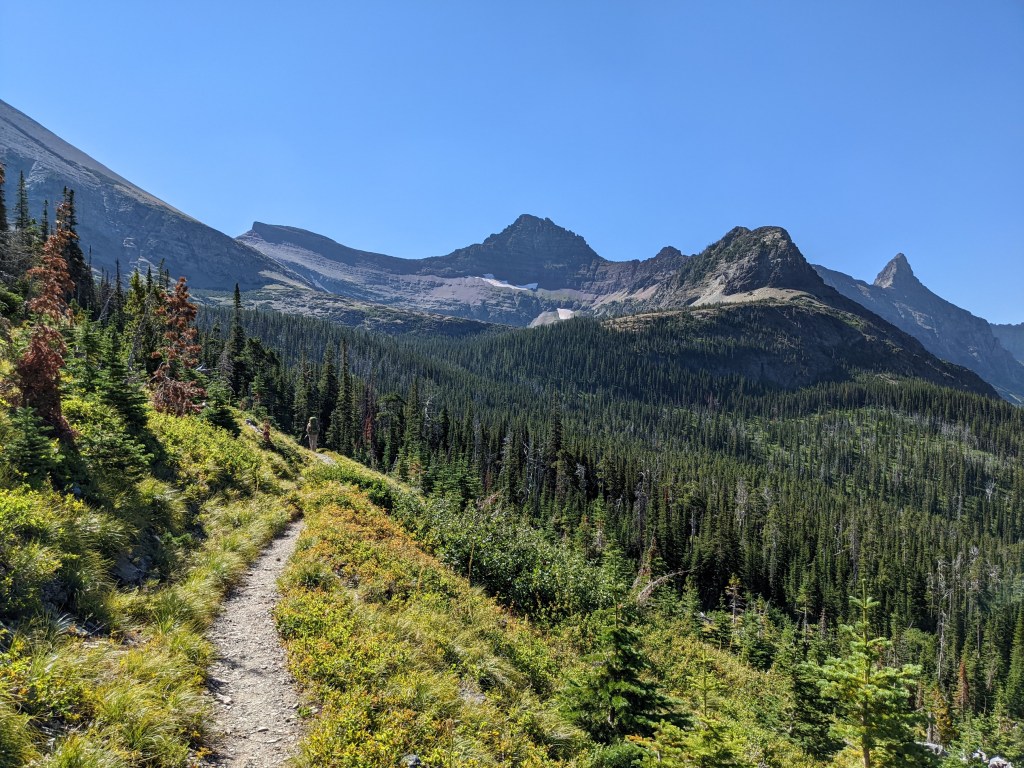
After ten years of applying to the lottery for a Wilderness Permit at Glacier National Park, a friend finally received a five day itinerary that we couldn’t pass up. Glacier National Park is in Montana’s Rocky Mountains, stretching up to the Canadian Border. Picture 700 miles of hiking trails with amazing views of alpine lakes, carved valleys and glaciers nestled amongst the surrounding peaks.
Backpacking in Glacier requires a Wilderness Permit, which can be reserved either in advance through a lottery system or by walk-in. For advance reservation, you submit your request for your desired trip and the wilderness rangers will do their best to match your request, but it is not guaranteed. For this reason flexibility is important for wilderness camping in Glacier, but it’s also important to know your own abilities and whether you will be able to complete the modified itinerary should that be the case. Getting a permit for the itinerary you would like, or something close to it, can take many years. As I said, it took us ten! We had received other itineraries before, but none made the drive from Colorado quite worth it.
What’s covered here:
Itinerary
Here is the itinerary we received with the mileage and elevation gain as stated from Glacier National Park:
- Day 1: Red Gap Pass Trailhead to Poia Lake
- Length: 6.40 mi
- Elevation up: 1,874 ft, down: 1,003 ft
- Day 2: Poia Lake to Elizabeth Head
- Length: 11.80 mi
- Elevation up: 1,815 ft, down: 2,718 ft
- Day 3: Elizabeth Head to Cosley Lake
- Length: 5.30 mi
- Elevation up: 240 ft, down: 290 ft
- Day 4: Extra day at Cosley Lake
- Length: 0 mi
- Elevation up: 0 ft, down: 0 ft
- Day 5: Cosley Lake to Iceberg/Ptarmigan Trailhead
- Length: 14.20 mi
- Elevation up: 3,430 ft, down: 3,302 ft
Photos & Trail Description
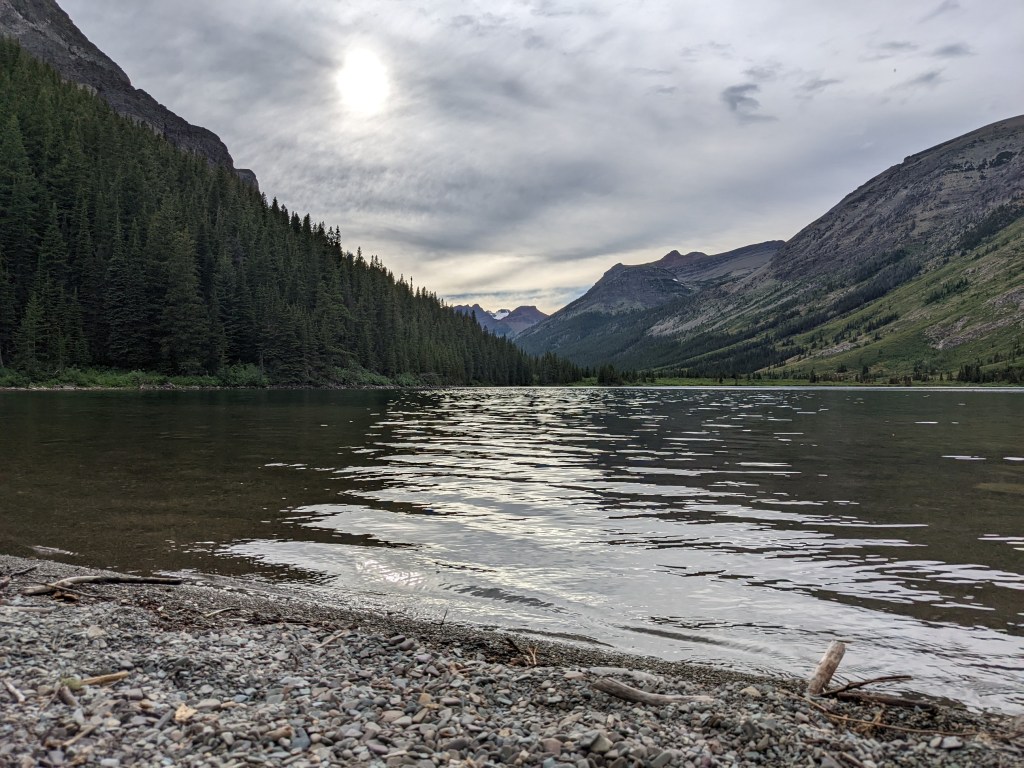
Poia Lake on Day 1 of the trip. We saw a moose near our campsite here.

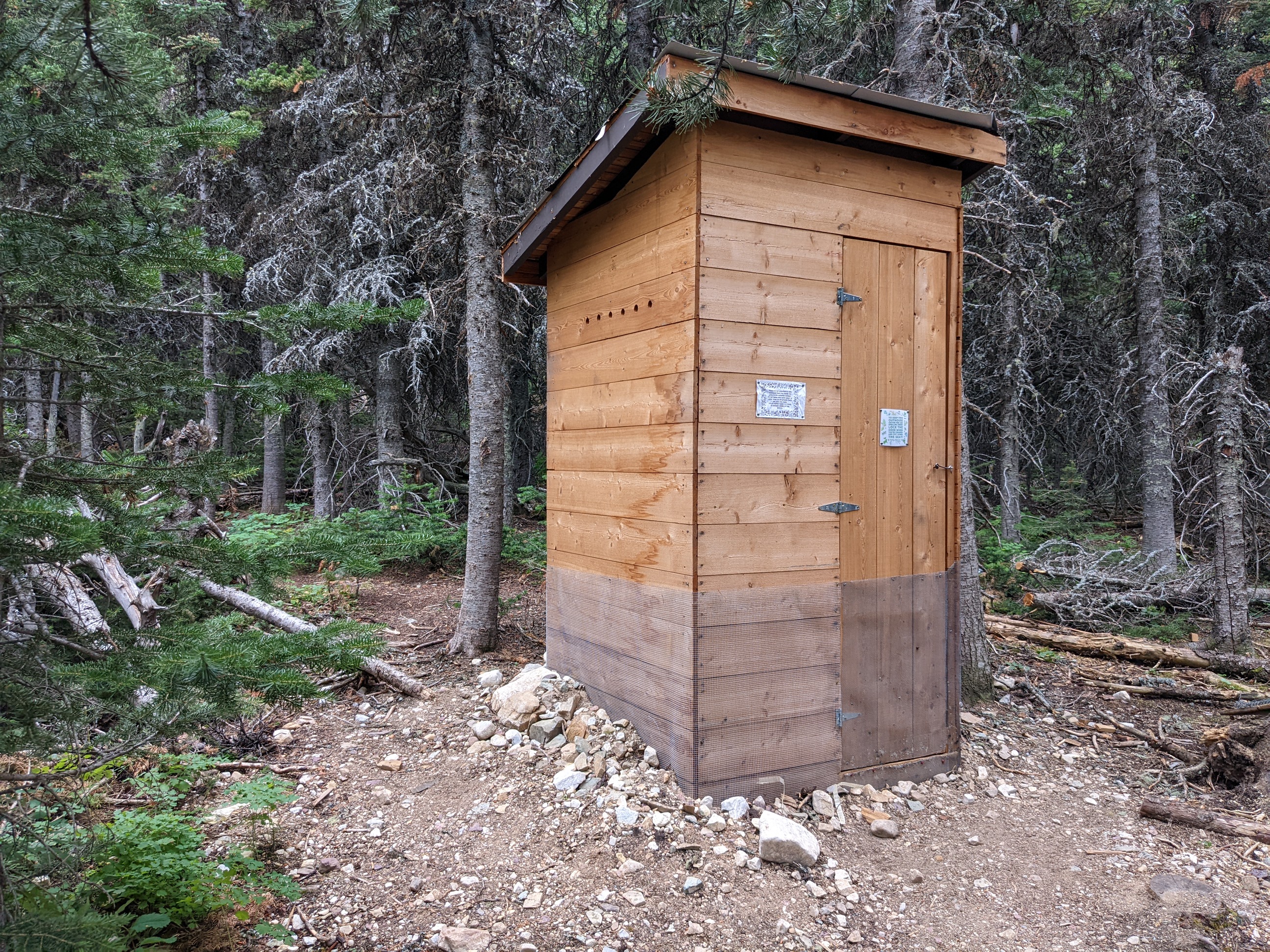

All campsites we stayed at had a food preparation area that was separate from the tent sites, a pit toilet and a place to hang food bags to be bear safe.
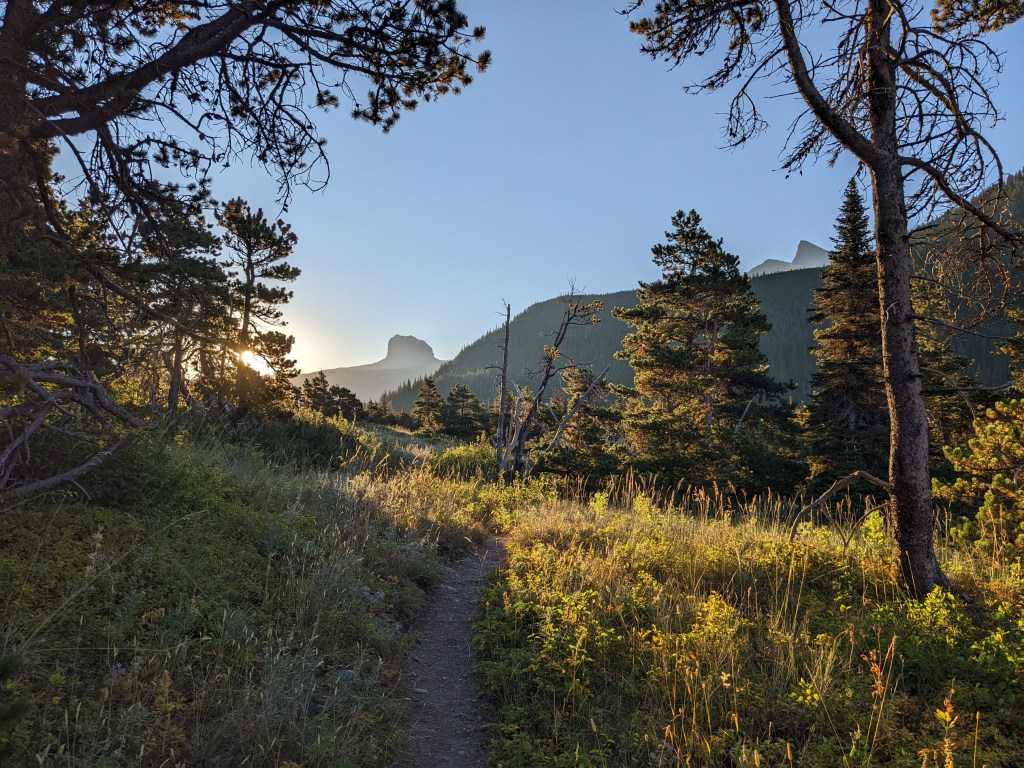
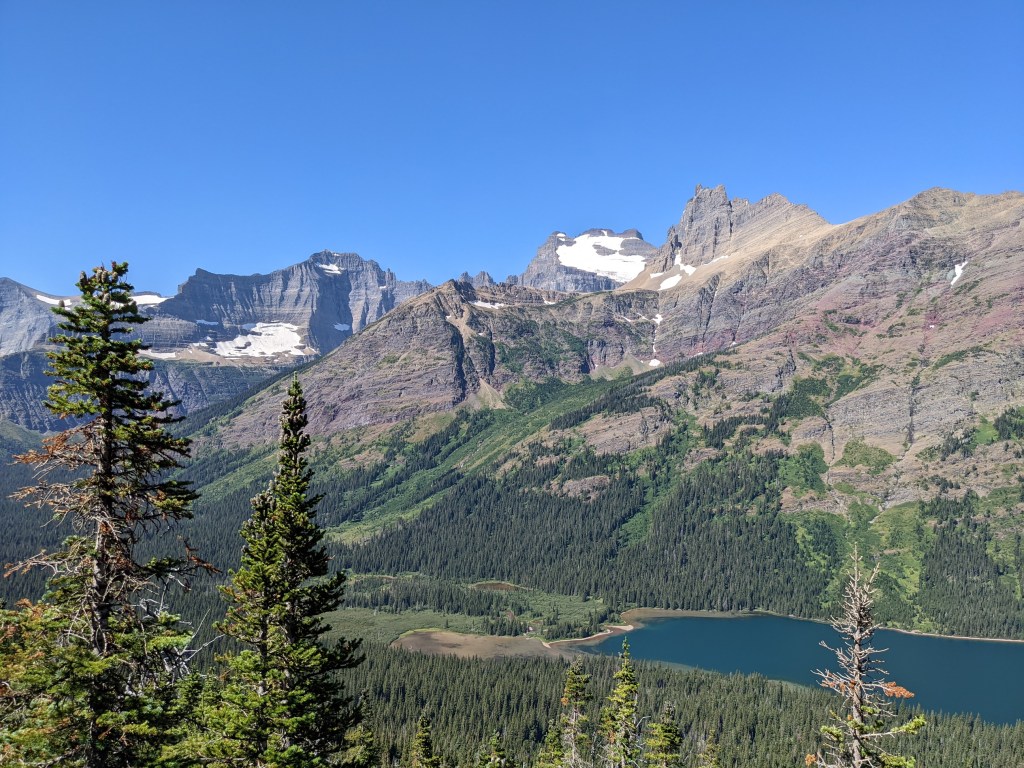
So many beautiful views wait above tree-line.
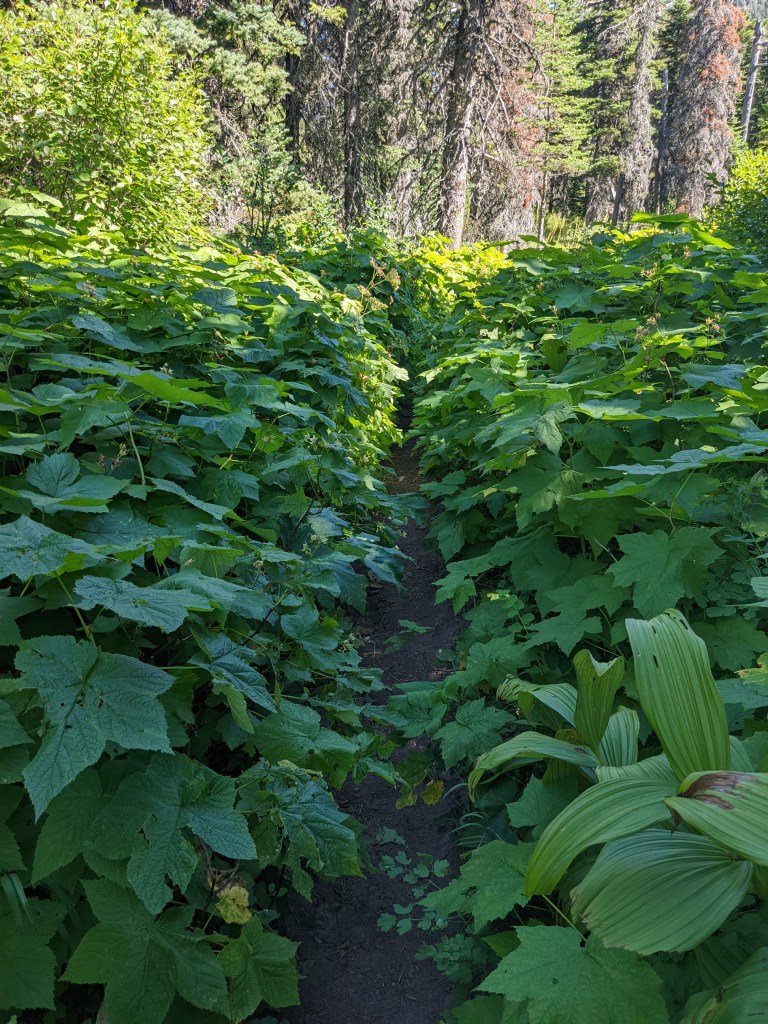
The trails below tree-line can be quite dense with foliage. This was a little nerve-wracking to hike through given the bears that call Glacier National Park their home. On our first day of hiking, we saw at least one pile of bear scat directly on the trail per mile, so we thought we would most certainly see a bear during our five days. Alas, we did not and we were all disappointed. We may have done too good a job with alerting bears to our presence as we hiked.

The last time I had hiked in Montana, I was quite frustrated that I did not have a way to get on the water. Montana has so many lakes! I vowed then that if and when I returned, I would bring a pool float. And so here I was; floating on Cosley Lake, one of the more highly recommended lakes and campsites at Glacier National Park. Each campsite has “lakefront” property.
After this experience, I highly recommend bringing a pool float when backpacking! It was such a fun and relaxing way to enjoy our time when we were not hiking. Yes, the water is cold, but it’s manageable if only part of your body is in it.
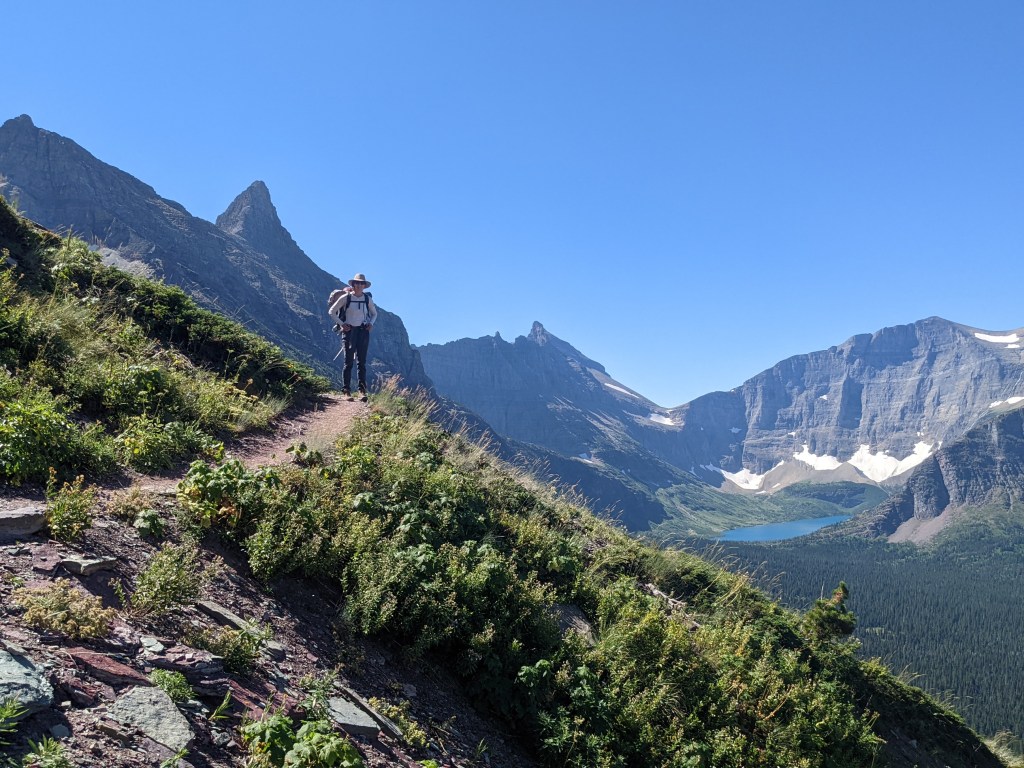
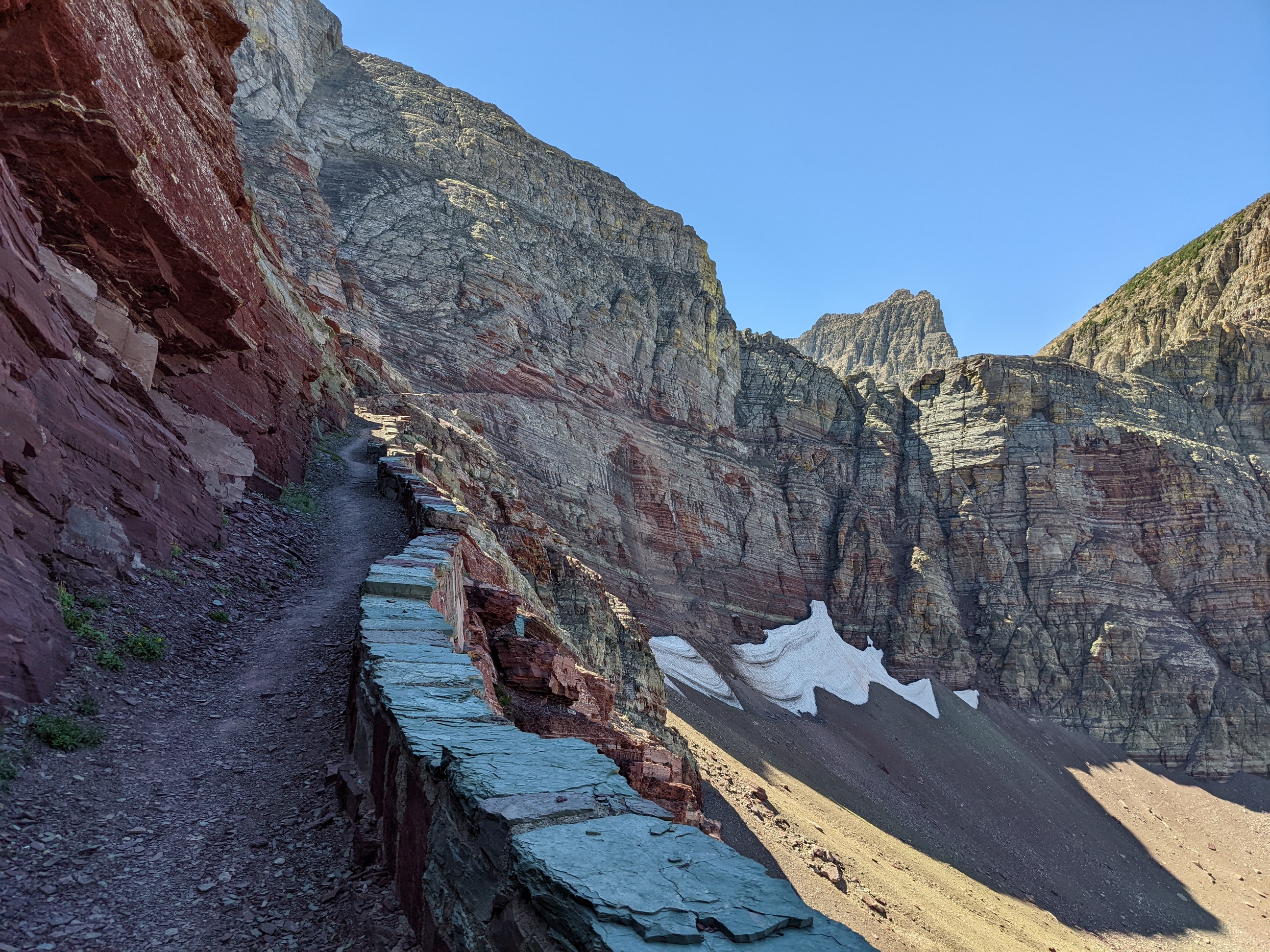


Day 5 was our hardest day in terms of total elevation gain and distance, but it was my favorite on the trail. The views were outstanding and the trail leading up to Ptarmigan Tunnel was formidable when viewed from afar. It is cut right into the side of the rock wall. Once the tunnel comes into view, there is still over a mile of steady uphill climbing to go before reaching it.
Packing List
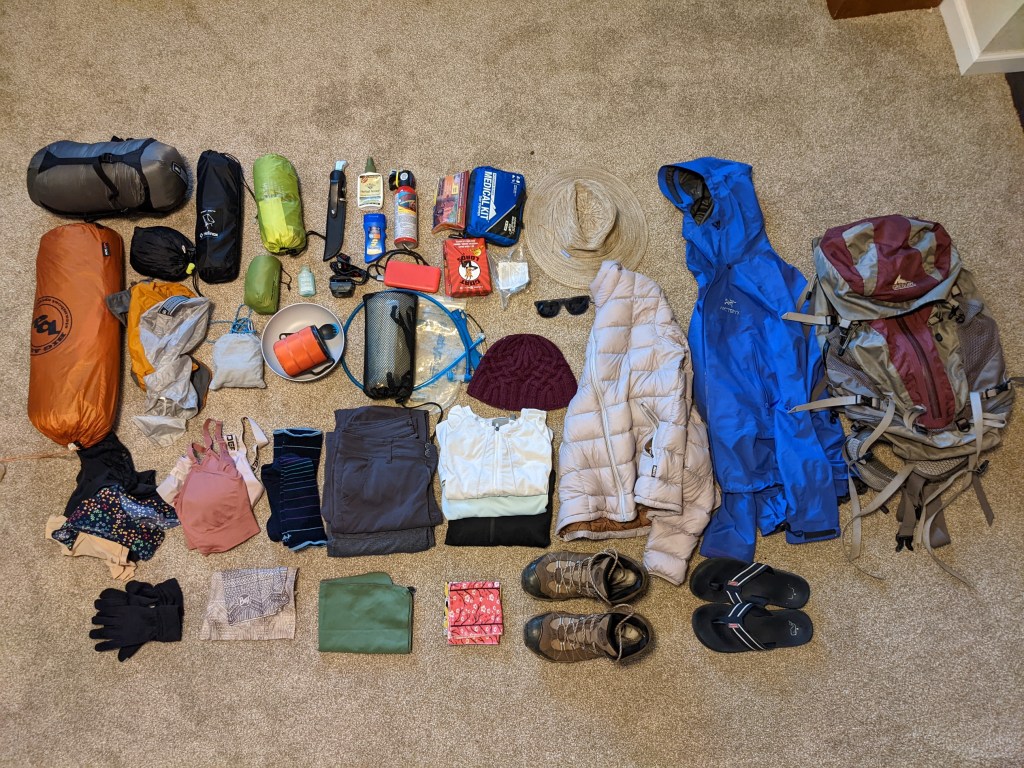
- Backpack (Gregory Women’s 55L)
- Sleeping Bag (15 deg REI sleeping bag)
- Tent (Big Agnes Copper Spur HV UL3)
- Sleeping pad (REI Flash)
- Pillow (Cocoon Inflatable Air Core Pillow)
- Rain cover for backpack
- Ultralight chair (Helinox Chair Zero)
- Extra stuff sacks
- Rope for hanging bear bag
- Headlamp
- Knife/pocket knife
- Sunscreen
- Toiletries
- Bug spray (All Terrain Under Armor)
- Bear spray (Counter Assault Bear Deterrent Spray)
- First aid kit (Adventure Medical Kit)
- Rechargeable battery pack
- Sun hat
- Sunglasses
- Warm hat/beanie
- Down coat
- Rain coat (Arc’teryx Beta SL Hybrid)
- Portable games
- All-purpose biodegradable soap
- Bowl
- Utensils
- Cup/mug
- Water filtration system (Platypus 4L Gravity Filter)
- Hydration reservoir (Platypus 2L)
- Underwear (one for each day, plus one)
- Period underwear
- Menstrual disc
- Sports Bras (2-3)
- Compression socks (2) (Sockwell)
- Pants (2 pair)
- Shirts (2-3, 2 lighter pair, one warmer)
- Gloves
- Neck protection (Buff Multifunctional Headwear)
- Microfiber towel
- Handkerchiefs
- Hiking boots: Women’s Oboz Bridger Mid B-Dry Waterproof
- Sandals
Not pictured: inflatable pool float, compass, map, cooking stove, utensils Base weight (not including food or water): 35 lb, Food weight: 5 lb
*As an Amazon Associate I earn from qualifying purchases.*

 From Trails 2 Tales
Leave a comment