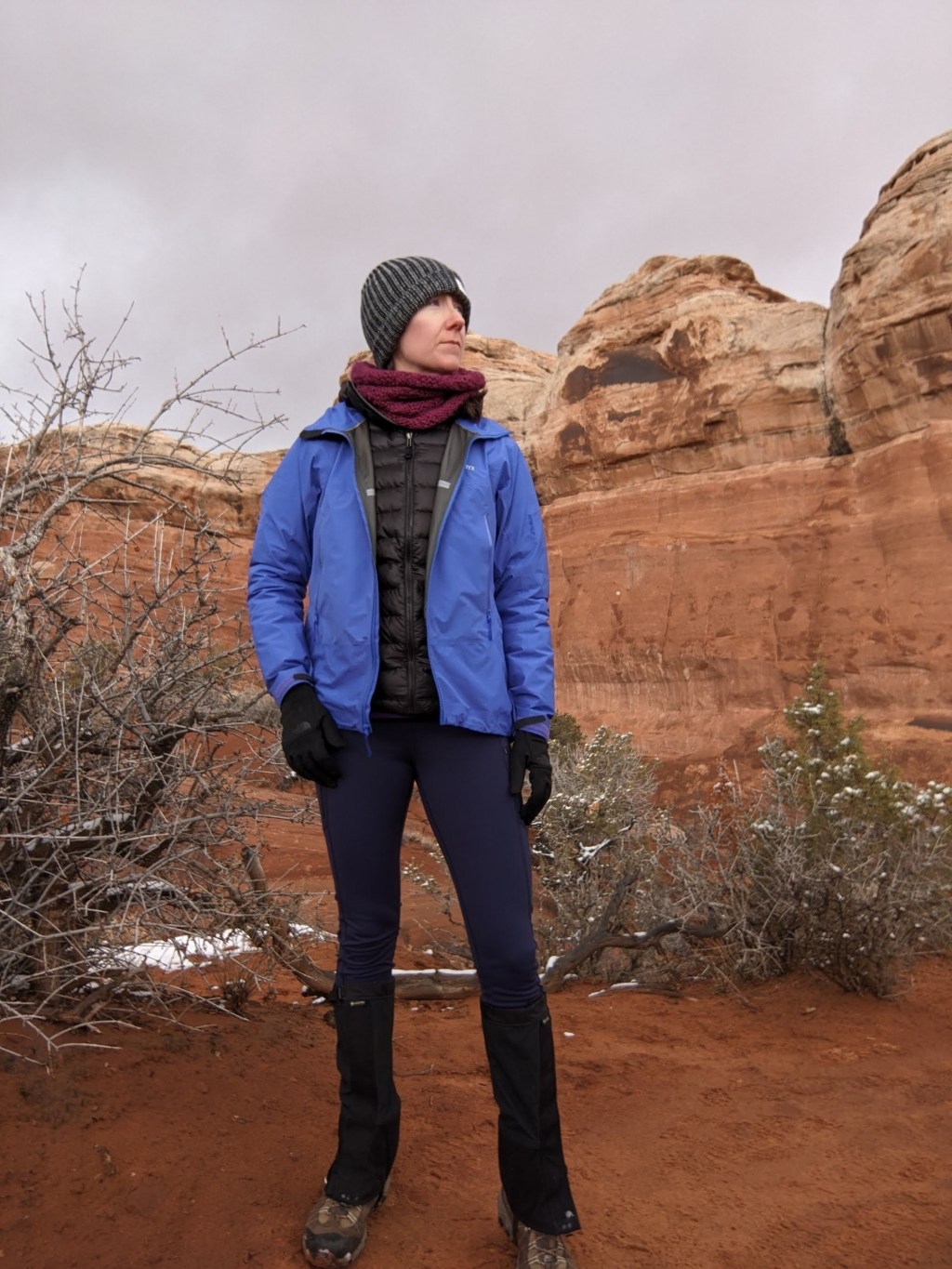
When hiking in cold temperatures, finding the right temperature balance is key. It’s obvious that you don’t want to get too cold, but you also don’t want to get too hot. Heavy sweating will work against you when you stop for a rest, as wet clothes increase heat loss through conduction and evaporation. For this reason, layers are your best friend for regulating temperature.
What is covered here:
- Base-layer
- Mid-layer
- Outer-layer
- Accessories
- Gaiters & Footwear
- Traction & Flotation
- Pro tip
- Hypothermia
- My Gear
Base-layer
The primary purpose of the base-layer is to wick moisture off your skin and keep you dry. The best materials in cold weather for this purpose are synthetic fibers, such as polyester, and natural fibers, such as wool and silk. Synthetic layers tend to be the best for wicking and durability but can retain odor. Wool is good for wicking and can provide better odor control as wool is highly resistant to odor-causing bacteria. Silk has only moderate wicking, odor-resistance and durability, but can make a great option for low-impact activities. Cotton is not advisable for winter activities, as it is very poor at wicking moisture and will leave you wet and cold after sweating. I like to choose merino wool bottoms and tops with a half- or quarter-zip to help regulate temperature further.
Mid-layer
The mid-layers’s primary purpose is insulation in order to keep heat in. This could include a fleece layer, down jacket or synthetic jacket. A fleece layer will let wind through, whereas a down or synthetic jacket tend to have a more wind-resistant outer layer. Down jackets, made with down feathers, are lighter weight and more compressible than synthetic jackets, making them ideal for backpacking. Their disadvantages are that they can be more expensive and lose their insulating properties when wet. Synthetic jackets will keep you warm when wet, but can be a bit bulkier and heavier than down jackets. For high-impact activities, I tend to forego this inner layer when on the trail to keep me from getting too warm but it does still come along with me in my pack to put on when I stop to rest.
Outer-layer
The outer-layer is meant to protect you from the elements, such as wind, rain and snow. If I’ll be doing a high-impact activity and the weather does not call for rain or heavy snow, I choose a softshell jacket. Softshells are not typically waterproof, but still provide some protection from the wind and rain. They are more breathable than hardshells, which is helpful when sweating, and tend to have more stretch for comfort. If I’ll be doing a low-impact activity, am expecting rain or heavy snow or will be out for an extended time, I’ll choose a hardshell jacket. Hardshells provide more protection from the elements as they are waterproof and windproof. However, they tend to be less ideal for high-impact activities as they are less breathable when compared to softshells. More expensive hard shells can have some breathability though and blend the line between the two.
Accessories
Accessories such as a warm hat, gloves and neckwear are essentials to bring on your trip.
Gaiters & Footwear
To keep those legs and feet warm and dry in snow, gaiters can be a huge help. They cover the top of the boot to keep snow out and and can extend up the calf to provide additional protection from deep snow. Be sure to also choose a waterproof shoe.
Traction & Flotation
If it will be icy on the trails, bring some sort of traction to put on the sole of your shoe, such as coiled steel cleats or metal teeth (crampons). I find that coiled steel cleats are best for walking or running on icy roads or sidewalks where the ice tends to be thin from shoveling/ plowing. When hiking on the trails, crampons are best for biting down in the deep ice and snow. If walking on a trail after a heavy snowfall, bring snowshoes to provide flotation. Some snowshoes will even have crampons on the bottom for variable conditions.
Pro tip
The one thing I can’t hike without in cold weather is a hanky for my runny nose. I find it far surpasses tissues or using the back of my glove!
Hypothermia
Hypothermia is abnormally low body temperature. It can happen even in cool temperatures above 40 degrees Fahrenheit if a person is wet. Hypothermia can affect the brain, which is dangerous because at that point the person may not know they are experiencing hypothermia or what to do about it. According to the CDC, symptoms of hypothermia are:
- Shivering
- Exhaustion or feeling very tired
- Confusion
- Fumbling hands
- Memory loss
- Slurred speech
- Drowsiness
If a person is experiencing hypothermia, replace any wet layers immediately with dry layers and try to warm the person’s core. This can be difficult to do when on the trail, but a warm drink carried in a thermos can be helpful as well as direct skin-to-skin contact, and get the person to a heated place as soon as possible.
My Gear
- Base layer: Arc’teryx Women’s Rho Lightweight Zip Neck (No longer available, but similar options here) and Arc’teryx Rho Merino Wool Bottoms.
- Mid-layer: A fleece (mine is Lowe Alpine and many years old) and/or Patagonia Women’s Down Sweater Hoody
- Outer layer: GoLite Softshell (many years old, no longer available) and Arc’teryx Women’s Beta SL Hybrid Jacket (other options here)
- Gaiters: Outdoor Research Crocodile GORE-TEX Gaiters (I choose men’s gaiters due to my height)
- Neckwear: Buff Multifunction Neckwear
- Snowshoes: mine are from MSR and are over ten years old, but here is a similar option
- Traction: Yaktrax Traction Cleats and Kahtoola MICROspikes
- The gear I listed above can be expensive. For more affordable options, I tend to look for outlet stores, buy second hand, buy from REI’s Outlet or Used Gear section, or wait for sales. Do keep in mind that when doing extended, multi-day trips or when you are far from shelter/heat, investing in quality pieces, especially your outer layer, will keep you more protected from the elements.
*As an Amazon Associate I earn from qualifying purchases. This is a small amount at no cost to you.*
 From Trails 2 Tales
Leave a comment