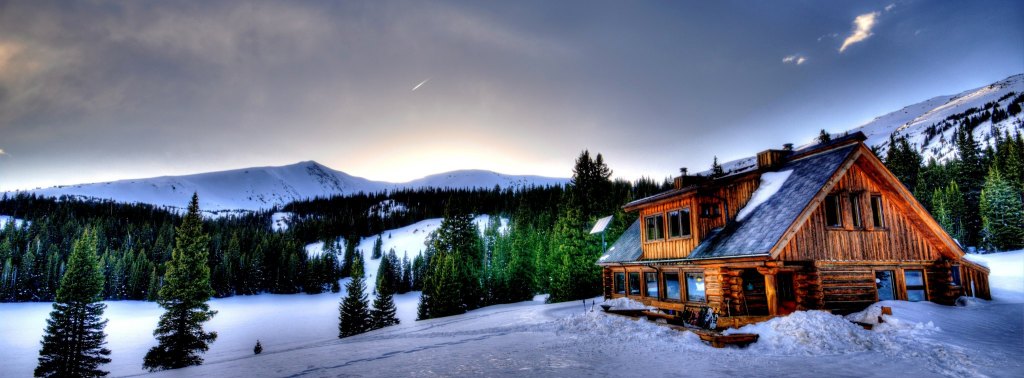
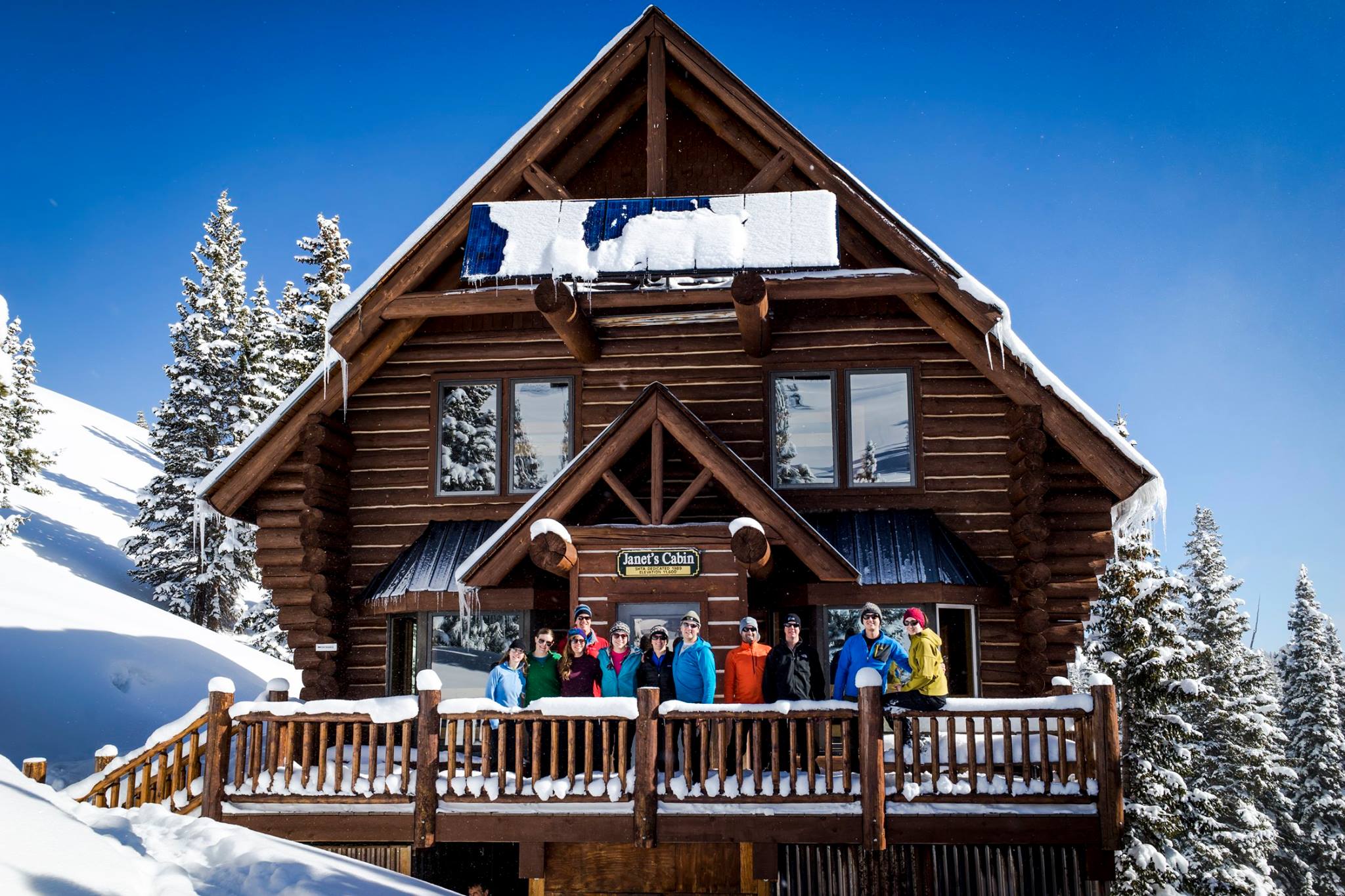
Colorado is well-known for its picturesque landscapes and mountain getaways. However, few people know about the 10th Mountain Division Huts, which are tucked away deep in the peaks between the cities of Aspen, Vail and Leadville. Many require a hike, snowshoe or ski in depending on the time of year, but a few have trailheads that get within less than a quarter mile of the hut in the summer months. There are fourteen huts that make up the 10th Mountain Division Hut system, each with their own unique views and layouts. In my opinion, the huts are more appropriately described as mountain cabins as they are a bit more luxurious than the vision evoked when hearing the word “hut”.
What’s covered here:
- 10th Mountain Division Huts History
- Hut Amenities
- Accessing the Huts
- Why You Should Go
- What to Bring
- Resources
10th Mountain Division Huts History
The 10th Mountain Division refers to an infantry division of the United States Army. In the 1940’s, a group of this division trained in winter mountaineering and skiing in the mountains of Colorado. Today, the 10th Mountain Division Huts are owned by a non-profit corporation started by Aspen skiers, including 10th Mountain Division veteran Fritz Benedict. The first of these huts was built in the early 1980’s. Click here to read more about the history of these huts.
Hut Amenities
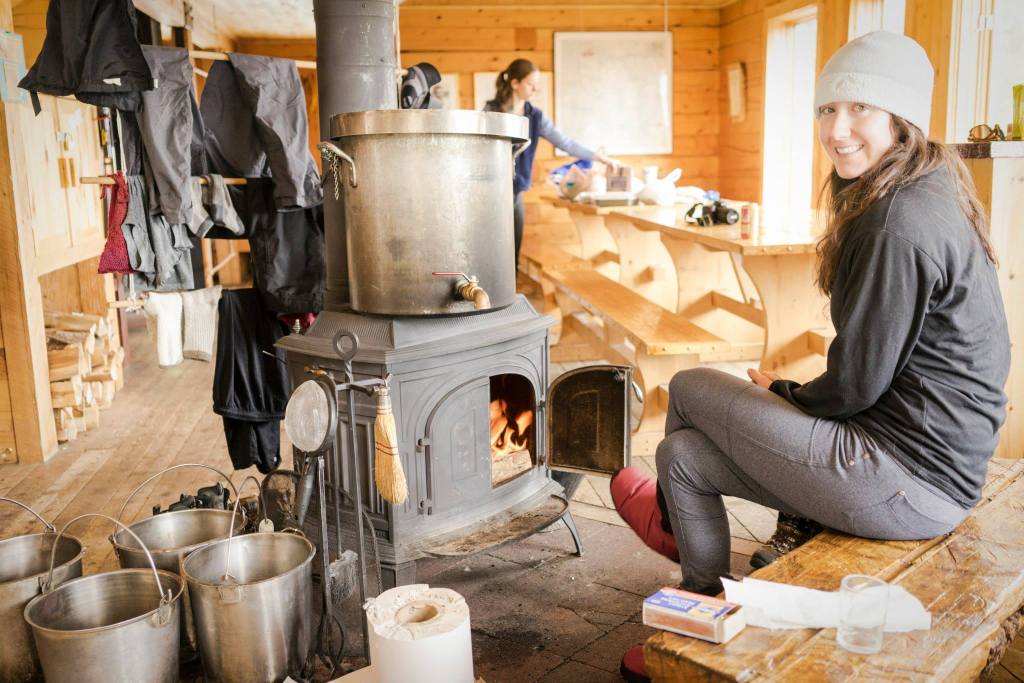
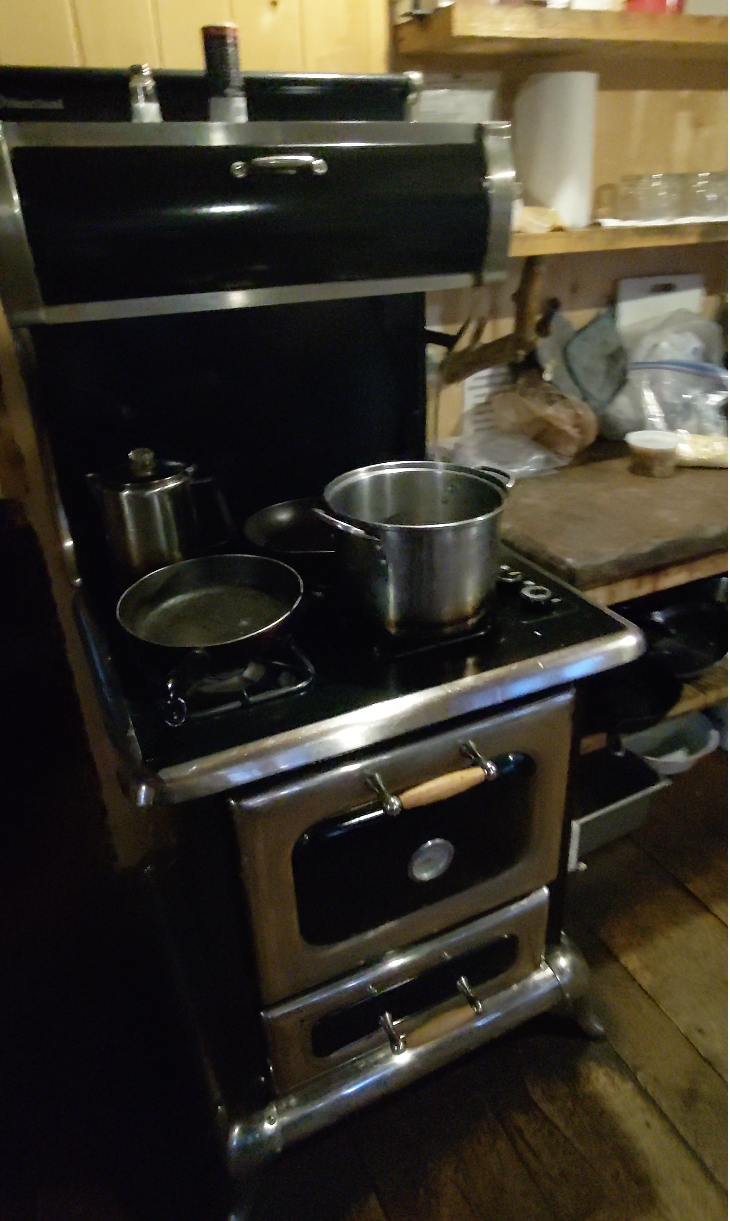
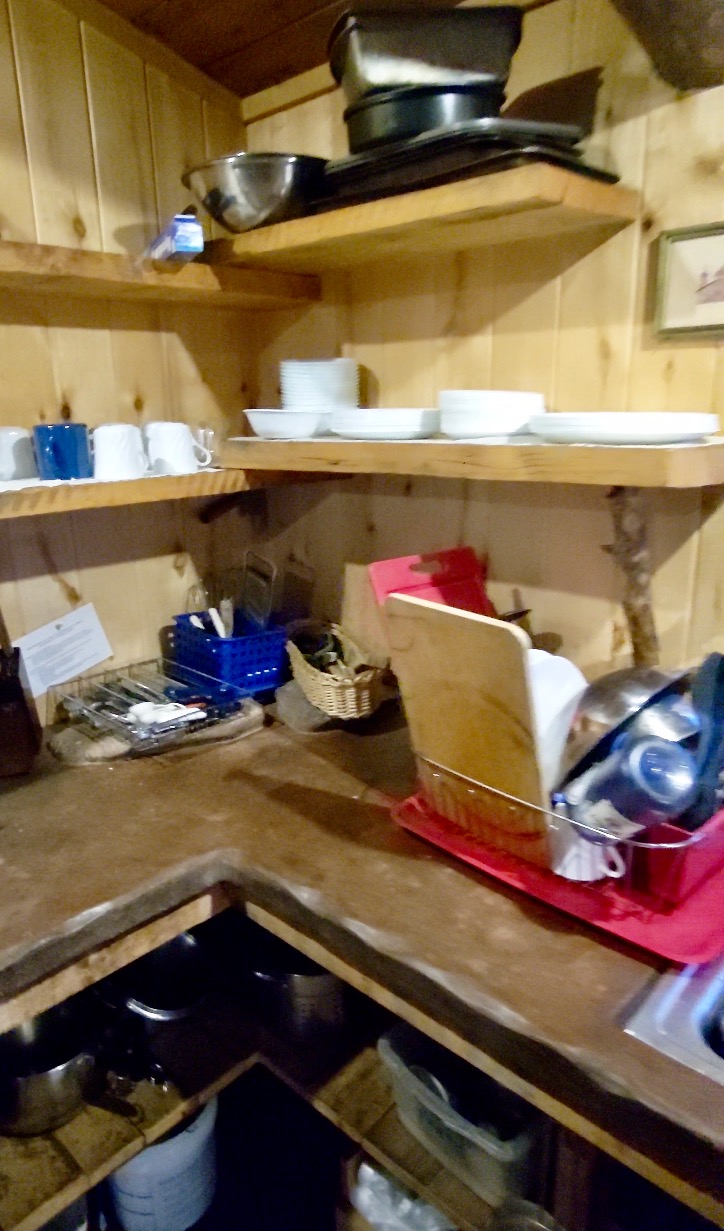
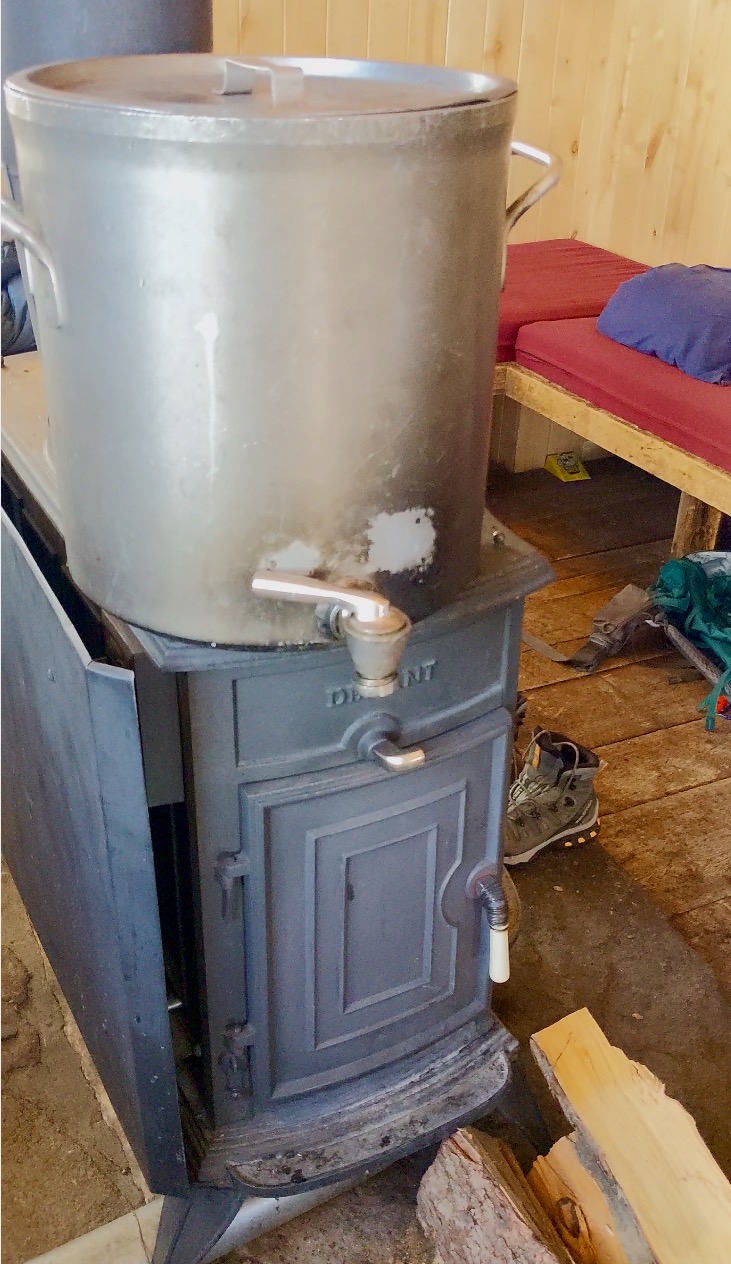
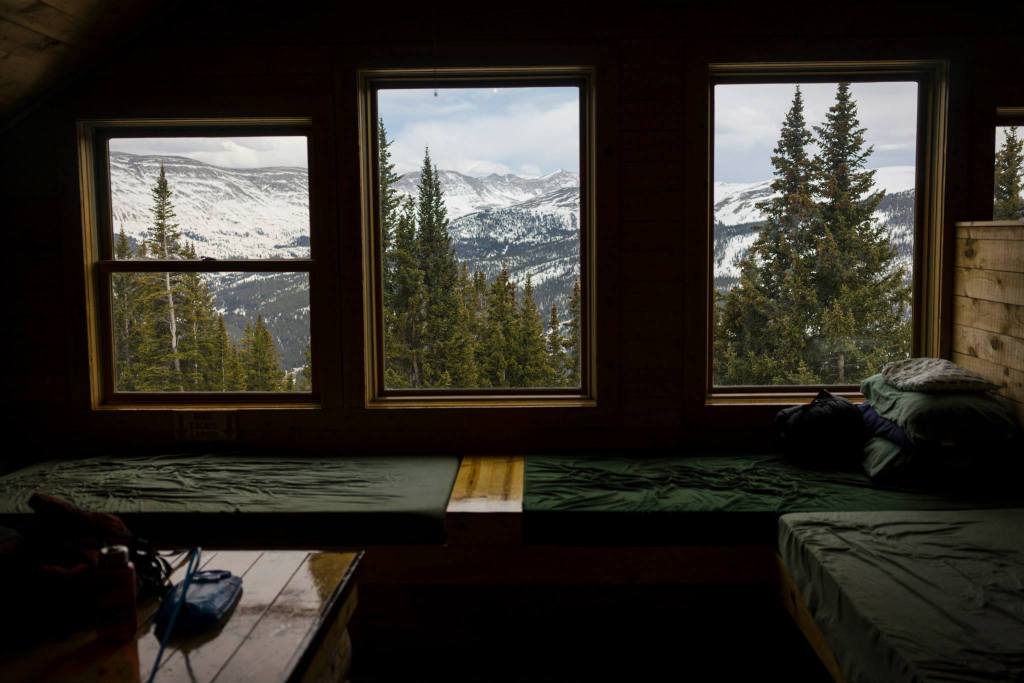
Each hut is a little different but in general has a wood-burning stove, firewood, matches, propane burners, photovoltaic lighting, cooking equipment, tables, beds and pillows. Most huts have an outhouse equipped with toilet paper. My favorite outhouse of all time is the one nearby the neighboring Benedict Huts, shown in the picture below. Two sides of this outhouse are made of floor-to-ceiling windows and make for an unforgettable toileting experience!
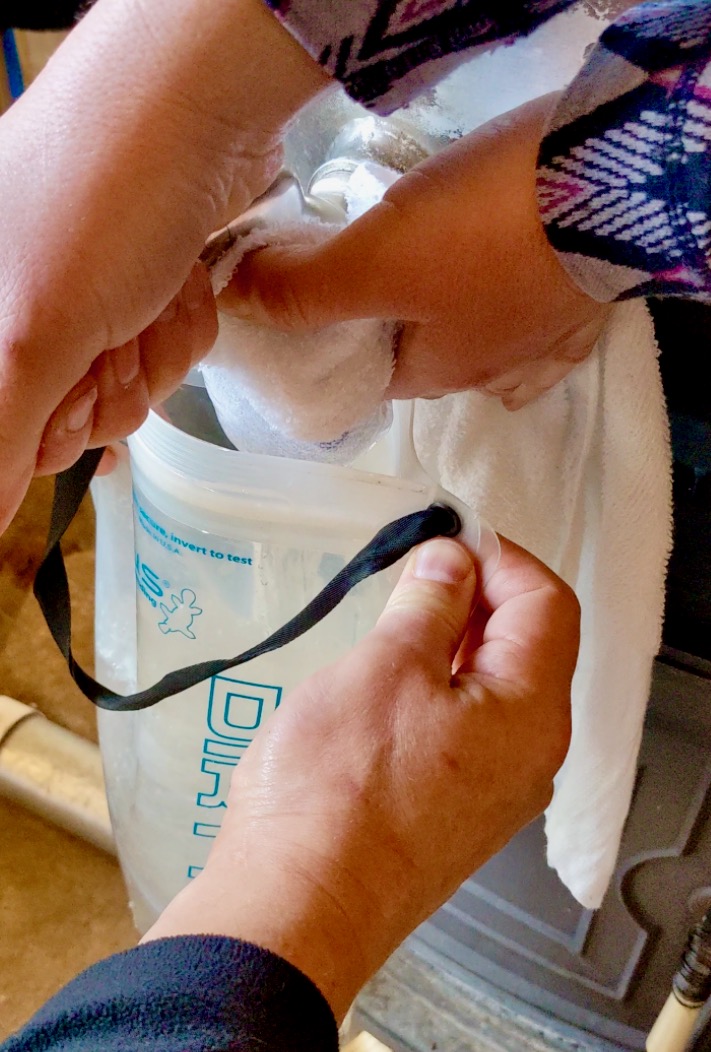
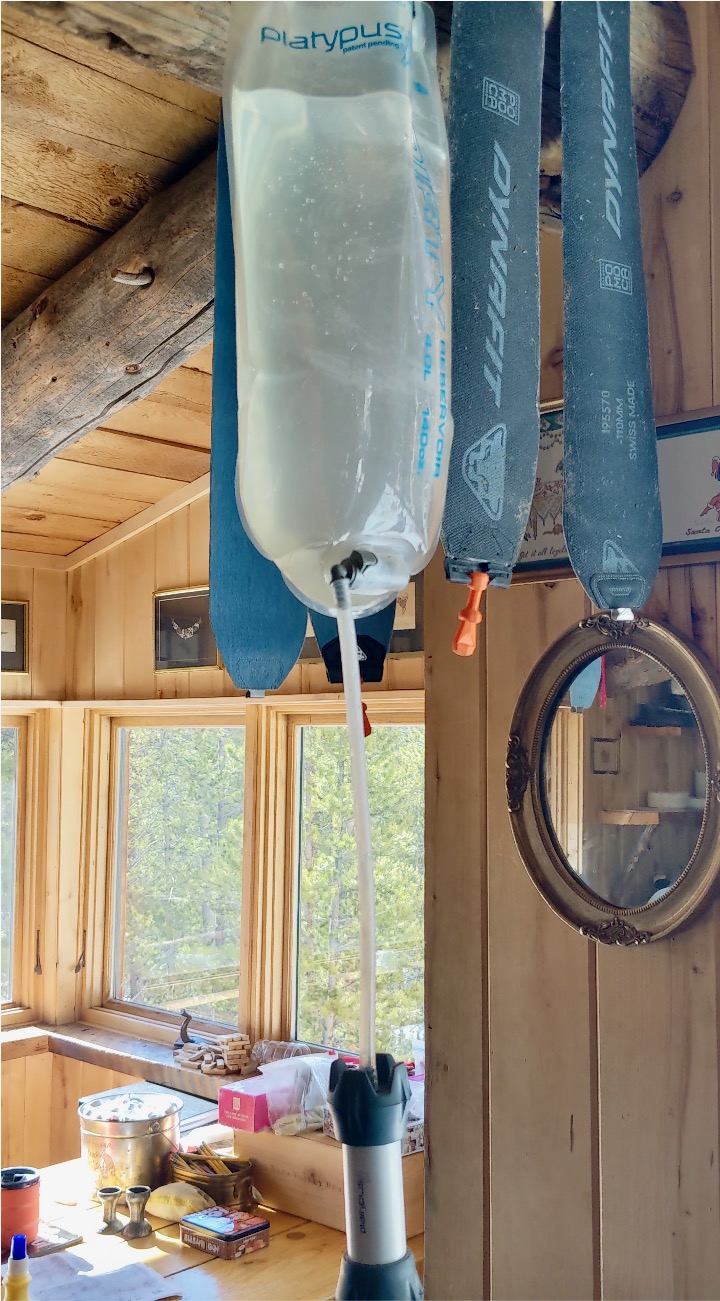
Water is obtained from snowmelt in the winter and nearby streams in the summer. In the winter, hut users must be prepared to shovel snow outside the hut, melt it in a large pot on top of the wood burning stove, and then filter the water before consumption. My favorite method for filtering water with a large group is to use the Platypus GravityWorks Water Filter, and I will pre-filter the water using a cloth around the spout on the pot.
The huts generally sleep 16 people, but can range in size from 3 to 20. One group can book all the beds, or multiple parties may end up staying at the hut at the same time.
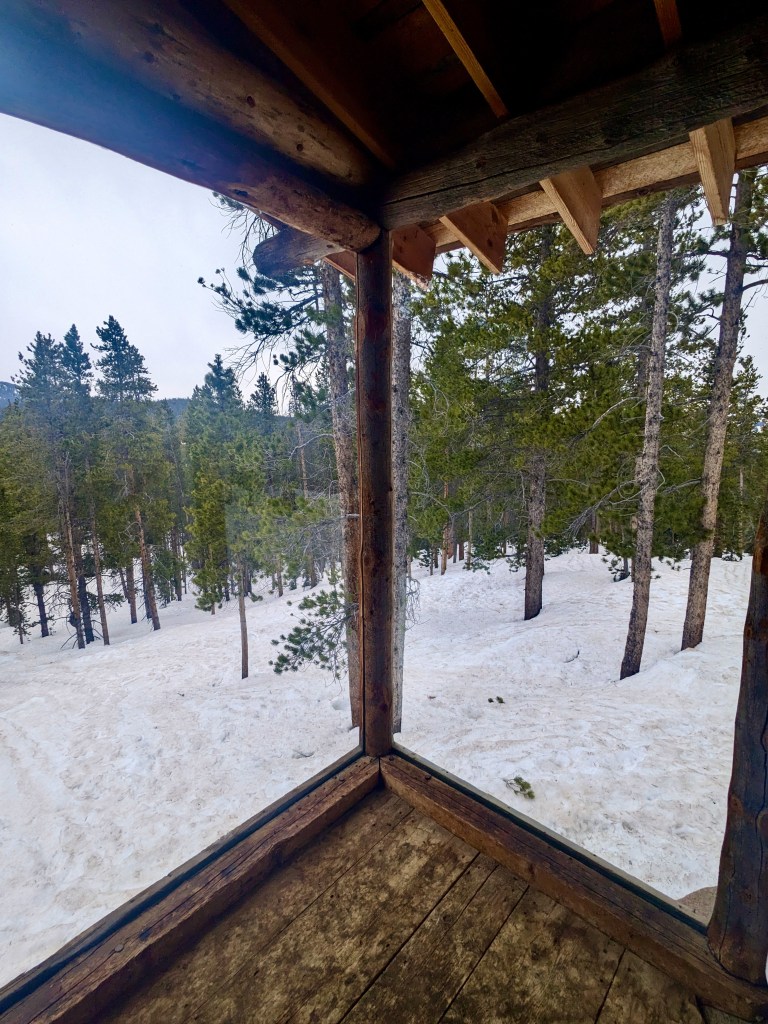
The view from the outhouse at the Benedict Huts (Fritz and Fabi’s).
Accessing the Huts
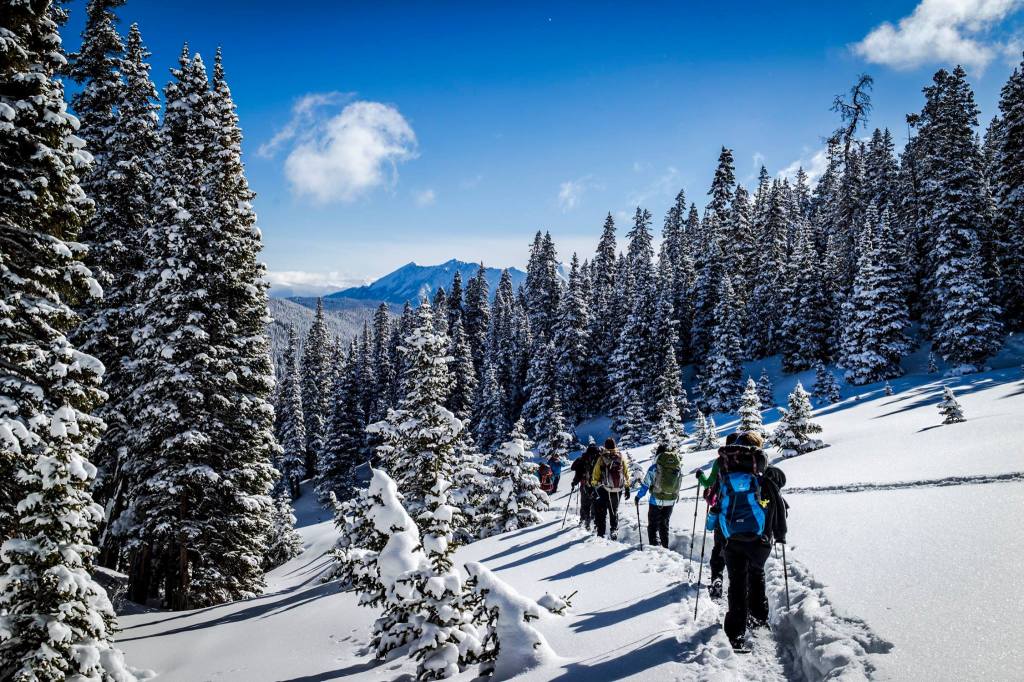
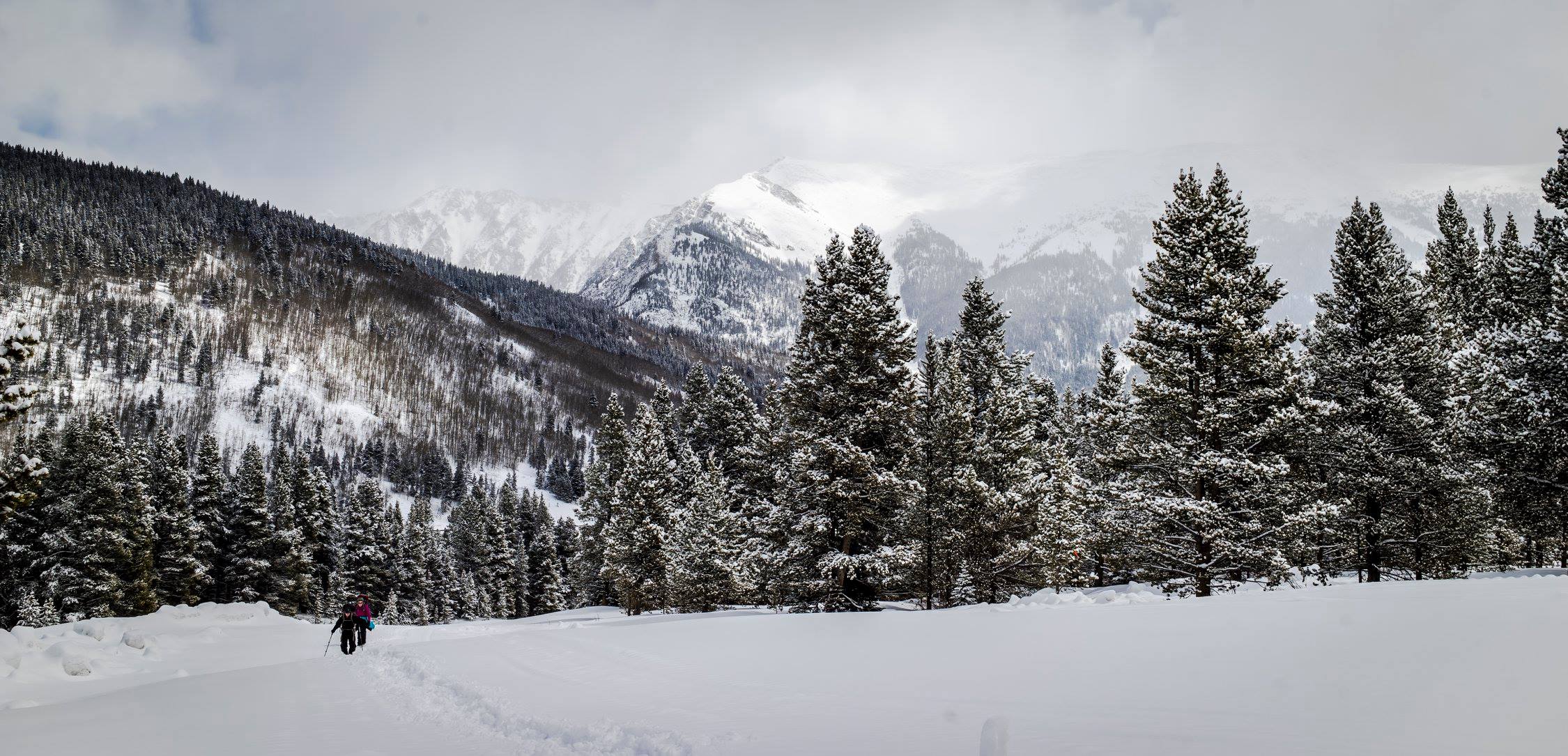
As mentioned previously, the huts can be accessed in the winter or summer and the routes will differ depending on the time of year. Distances can vary from just under a quarter mile to eleven miles, and many of the huts are at elevations of 9,000 to 12,000 feet.
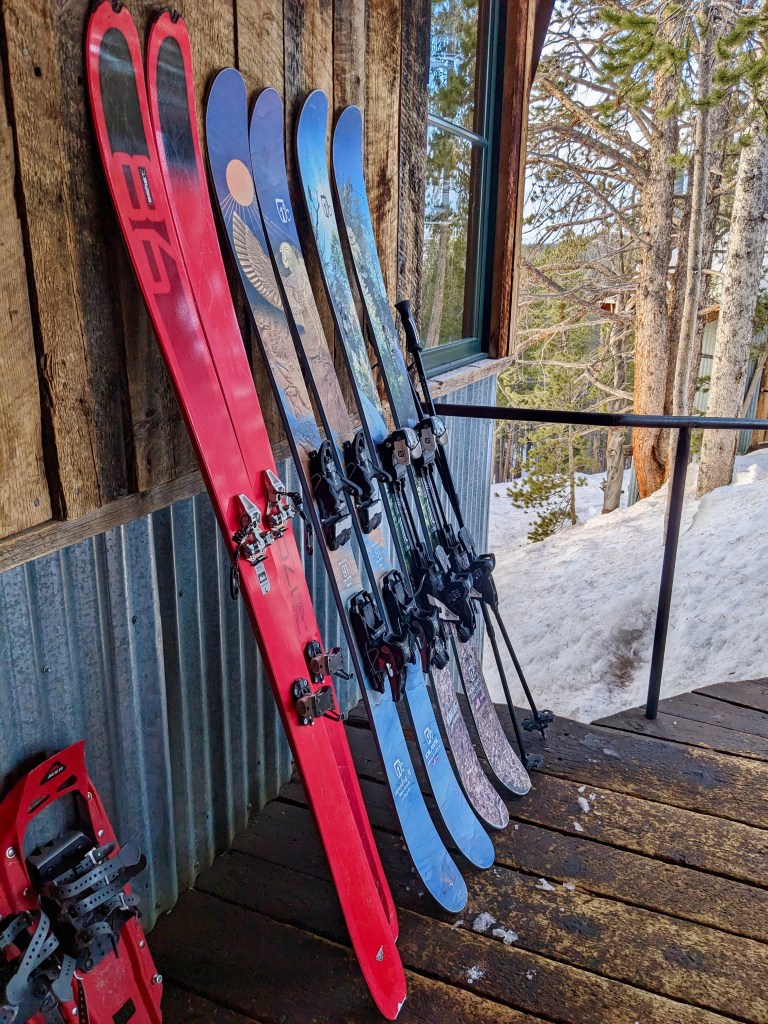
Snowshoes or skis are recommended in the winter as snow conditions are unpredictable and sinking deep into the snow for miles is not an enjoyable or even safe way to reach a hut.
Why You Should Go
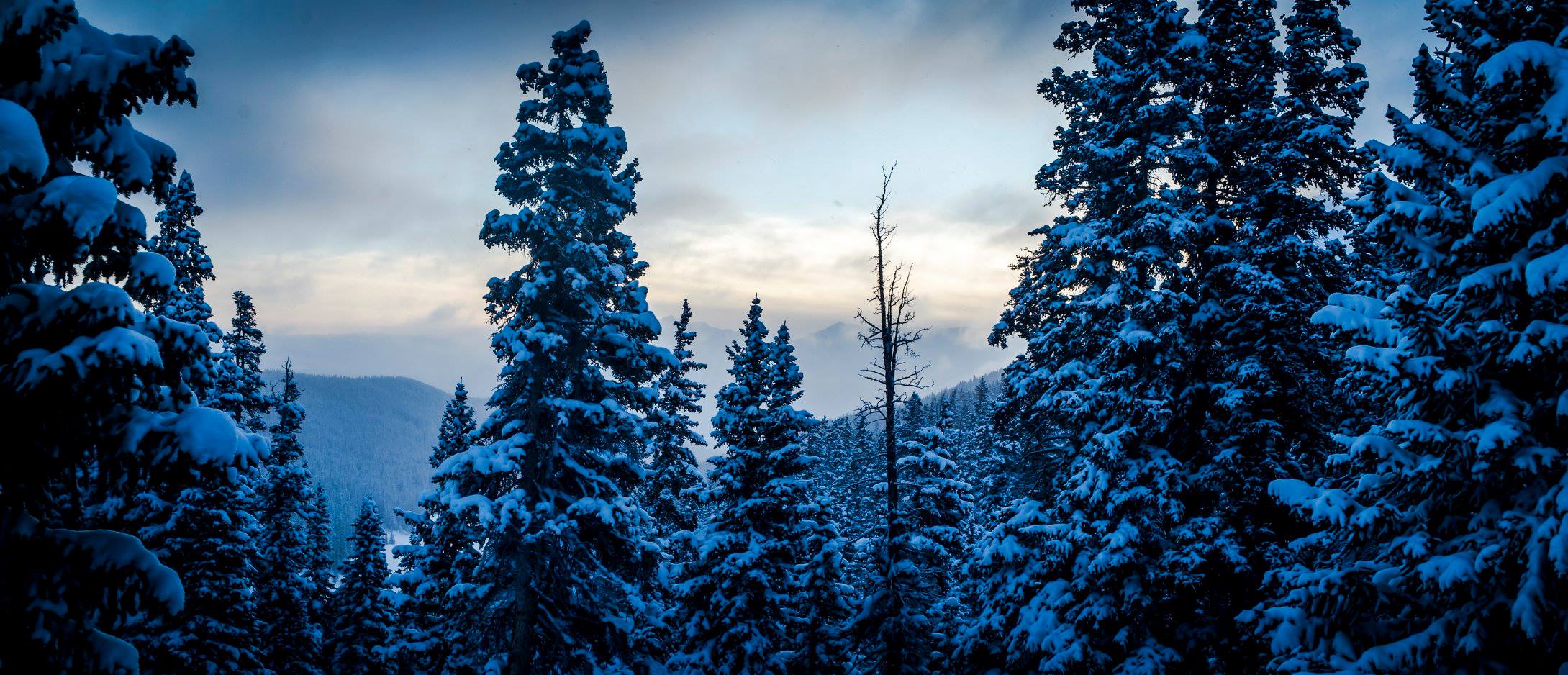
If you’re looking to unwind and unplug, these huts provide a perfect getaway to do just that. My favorite memories of these hut trips have included mornings spent tromping through untouched, sparkling snow while exploring the surrounding areas and then spending the rest of the day gathered around a warm, crackling fire with friends as we talk, play games and eat delicious meals prepared by ourselves. Additionally, these huts provide ample solitude and many have breathtaking views directly out of the large windows.


What to Bring
Since the huts are well-stocked with amenities, the primary things needed are warm clothes, outer layers to keep you protected from the elements, a sleeping bag, water purification system and all the yummy food you can carry. A more detailed list for visiting the huts in the winter follows, with the items I use in parentheses:
- The Ten Essentials!
- Backpack (Gregory Women’s 55L)
- Sleeping Bag
- Rain cover for backpack
- Extra stuff sacks for clothes, toiletries, food
- Headlamp & spare batteries
- Sunscreen
- Toiletries
- First aid kit (Adventure Medical Kit)
- Sunglasses
- Warm hat/beanie
- Down coat
- Rain coat (Arc’teryx Beta SL Hybrid)
- Base layers (a thermal legging and top, and a water resistant outer pant) (See my post on how to layer for winter hiking here)
- Underwear
- Compression socks (2) (Sockwell)
- Portable games
- Water filtration system (Platypus 4L Gravity Filter)
- Hydration reservoir (Platypus 2L)
- Gloves
- Neck protection (Buff Multifunctional Headwear)
- Microfiber towel
- Handkerchiefs
- Hiking boots: Women’s Oboz Bridger Mid B-Dry Waterproof
- Snowshoes (MSR Evo Ascent)
- Gaiters (Outdoor Research Gaiters)
- Skis
- Skins for skis (Pomoca Skins)
- Trekking/ski poles
- Slippers for around the hut
*As an Amazon Associate, I may earn a small amount from a purchase made through the links above, at no extra cost to you.*
Resources
Click here for the 10th Mountain Division Huts website. This website will allow you to make a reservation and also provides more detailed information about navigation, avalanche awareness and safety when traveling to these huts. Be sure to read this information!
Click here for the Ten Essentials for hiking and camping.
Click below for my post on how to layer for winter hiking:
 From Trails 2 Tales
Leave a comment