
Recently I was given the incredible opportunity to be part of the Elja Experience Program through Lauf, an Icelandic company that designs and manufactures road, gravel, trail and XC mountain bikes. The ask: try out an Elja Trail mountain bike and 1.) report back on my first impressions, 2.) test out different tire widths, and 3.) comment on my overall takeaways after two months. This post will go into my thoughts on the bike after two months of riding it and what I considered to be the main contributors to my enjoyment on the bike when compared to my usual ride, which are the wheel and tire size, weight of the bike and RockShox Ultimate Flight Attendant. For more information on the first two requests, see my Instagram account for the tire comparison and first impressions.
For background, I ride primarily in the dry and rocky terrain of Colorado on anything from flowy terrain to technical high alpine climbs. My usual ride is a 2013 Specialized Safire Comp with 120 mm of travel and 26″ x 2.1″ tires. This was the first and only mountain bike I have ever had and, coincidentally, I’d recently been feeling that I had outgrown my bike. So when I received word of the Elja Experience Program, I was excited and more than ready to test out a new mountain bike. Specifically, I received the Elja Trail Race Flight Attendant from Lauf. Click here to see the overall specs for the bike.
Overall Bike Feel
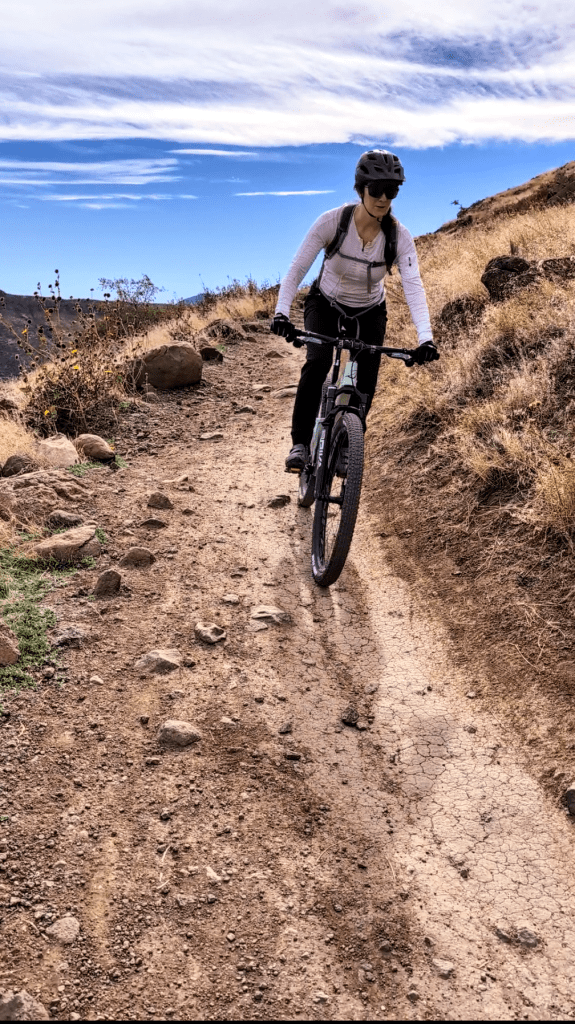
As stated previously, my current mountain bike has 26″ x 2.1″ tires. I chose the Specialized Safire Comp over a decade ago because, as a true beginner to mountain biking at that time, I wanted a bike that was easier to turn and the 26″ wheels fit the bill for me. As I’ve progressed in my skill and technique over the years, I became more interested in trying a bike with larger wheels to increase speed and to be able to roll over obstacles more smoothly.
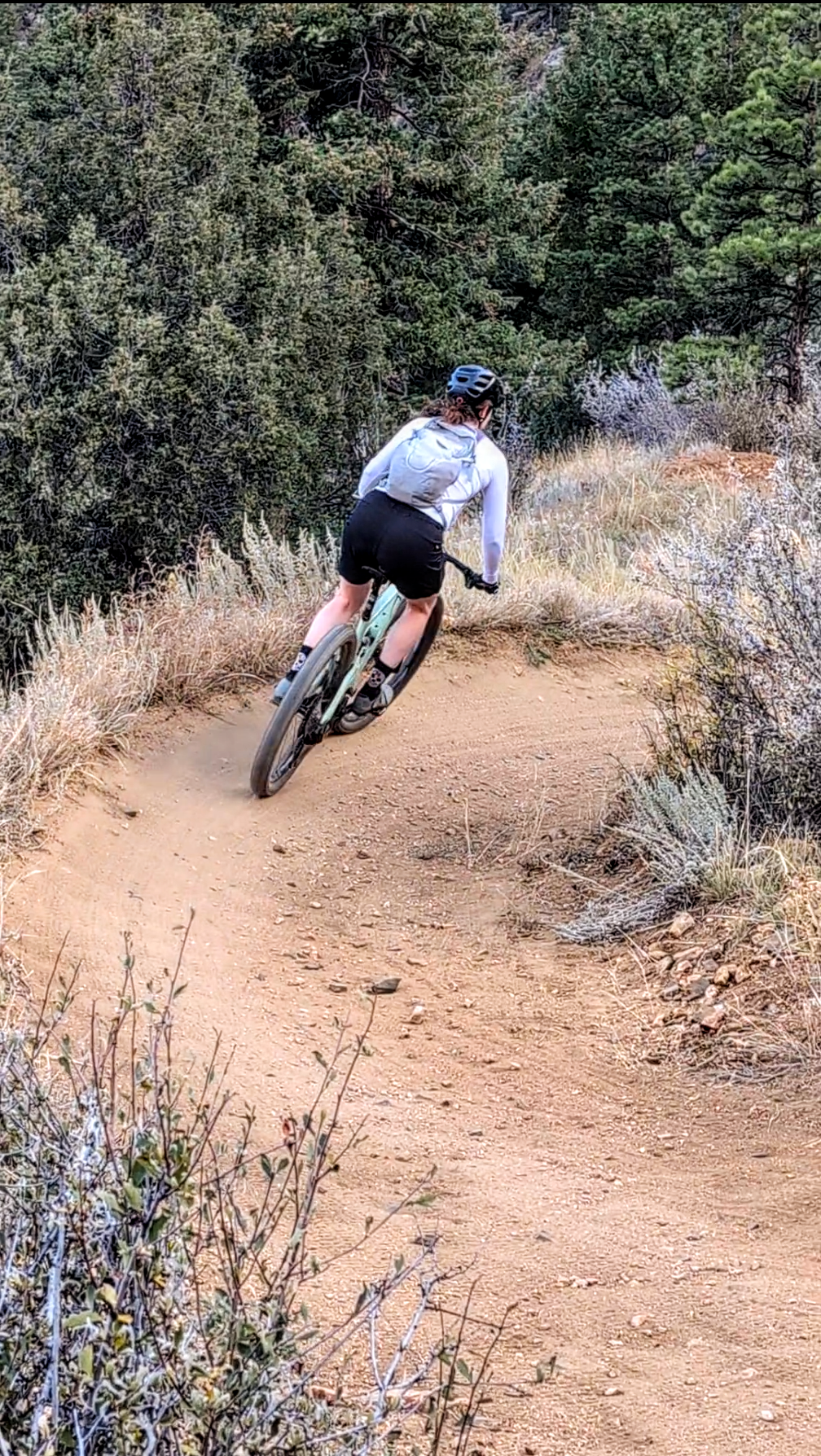
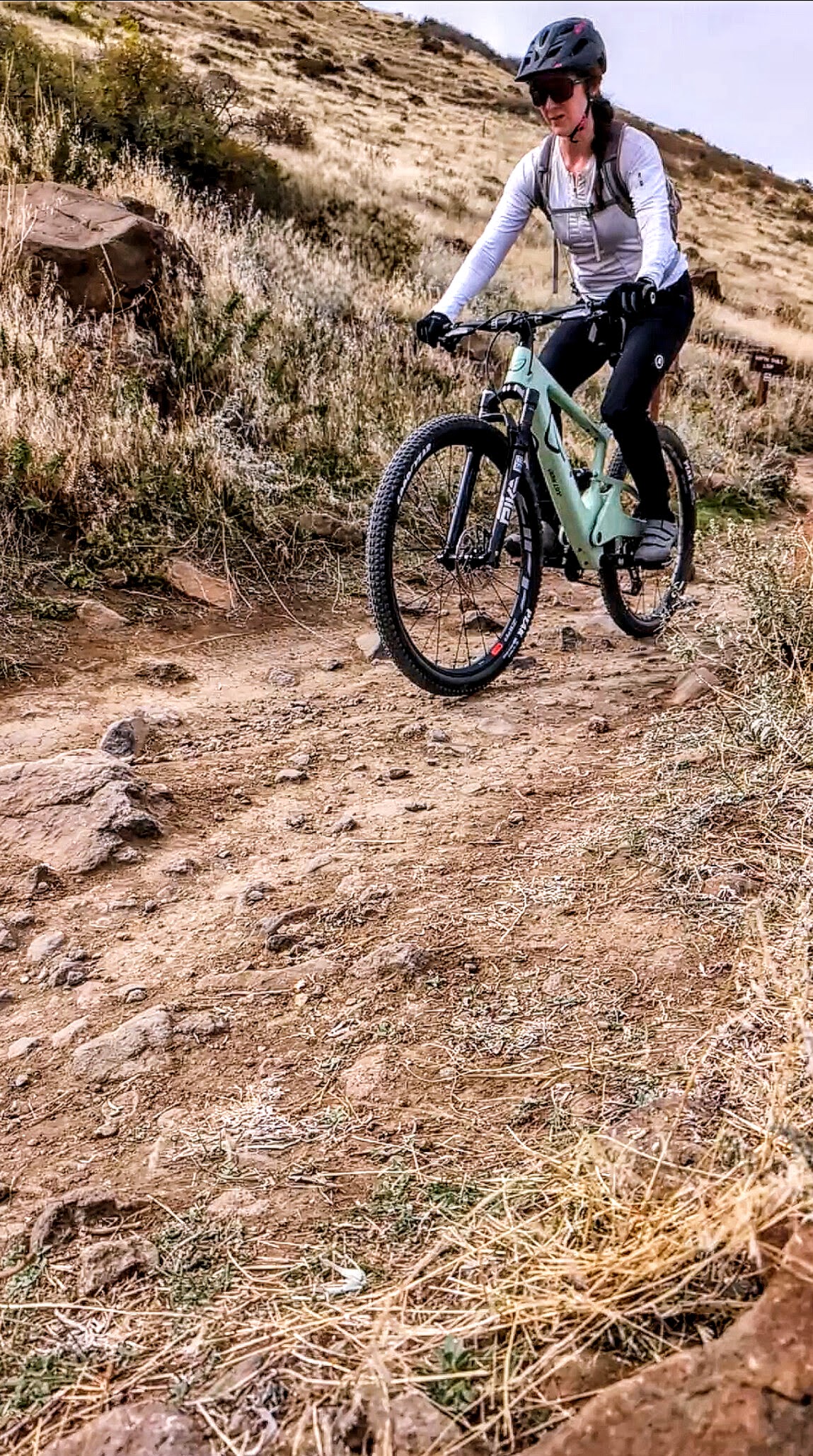
Fortunately, the Lauf Elja not only fit the bill with 29″ wheels and 29″ x 2.6″ tires, but Lauf also challenged me to try even wider tires (the fork can accommodate a tire width up to 3″). I thought the larger wheels might require a longer adjustment period for me, but I was pleasantly surprised to find that on day one they felt very natural and even increased my confidence and capability with more technical terrain. On my first ride with the Elja, I eagerly sought out challenges that I used to avoid just to see what the bike and I could handle. I was moving faster than I have previously, both on the uphill and downhill. Having a carbon frame, the bike is lightweight and nimble, lending to its speed. The front fork allows for 130 mm of travel while the single pivot design provides 120 mm of travel. The wider tires and lower pressures effectively increased that travel and allowed for a more comfortable ride.
Tire Width
*This section is covered in a bit more detail in my Instagram post, but I felt it deserved a space on the blog as well.
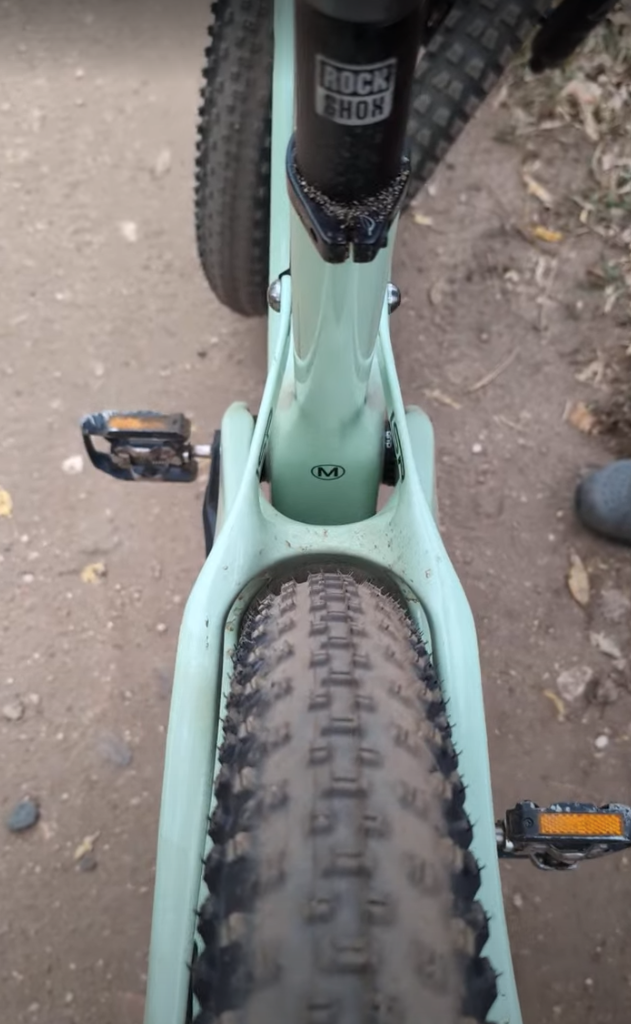
The owners of Lauf are innovators (they won the 2025 Design & Innovation Award) and, as such, they are designing mountain bikes that can accommodate up to a 3″ tire. They believe in the ability of wider tires and the lower pressures they require to decrease resistance and increase speed. As part of the Elja Experience Program, they asked that we compare the performance of two different tire widths. I started with the stock Goodyear Peak 29″ x 2.6″ tires, and then decided to swap these for a wider tire to see if it did indeed result in less resistance and a smoother ride. And, secretly, I was also interested in the wider tires for winter riding. Because few mountain bikes that can fit 3″ tires exist, there are currently few options in this width. I looked at the WTB Ranger and the Maxxis Minion, and ultimately went with the WTB Ranger 29″ x 3″ tires, which felt more appropriate for my riding style and terrain.
Lauf was initially hoping for objective testing to determine whether the wider tires would increase speed, but it quickly became apparent that such testing would be impossible for me to carry out on my own. And, no test could really capture all the real-world riding scenarios that one might find themselves in. In the end, Lauf requested that I speak to the overall feel of the different tires. For full disclosure, I only get three rides in on the WTB Rangers prior to this post, but here are my initial thoughts:
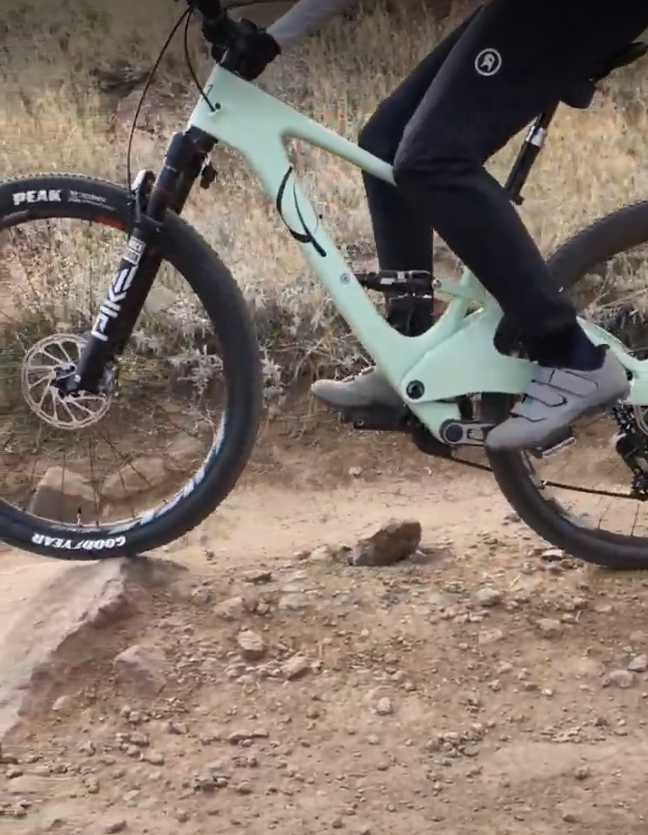
- I noticed the extra weight of the wider tires on the steeper climbs, but it was only slight.
- I did feel more confident rolling over roots and rocks due to the lower pressure of the wider tires which, in effect, increased the travel capability of the bike. This offset the slight increase in sluggishness that I felt with the Ranger on the uphill.
- There was less traction on technical climbs with the Ranger, likely due to the less beefy tread.
- On both tires I felt that I was being bounced around when rolling between larger rock features.
My takeaway from trying the different tires is that they are both great for their own specific purposes. The Goodyear Peak might serve better on less technical terrain for faster speed and climbing, while the WTB Rangers allow me to take on more technical terrain with more confidence and offset the slight sluggishness felt with the increased weight. I will definitely keep trying out both tires, and if I had another set of wheels I would swap them out accordingly. For now, I plan to leave the WTB Rangers on and am excited to try these out in the upcoming Colorado winter.
TIRE SPECS
29″ x 2.6″ Goodyear Peak 29″ x 3″ WTB Ranger
- TCS, 120 TPI
- Weight: 790g
- 20 PSI front, 21 PSI rear (using SRAM Tire Pressure Guide)
- TCS, 120 TPI
- Weight: 1,110g
- 17 psi front, 18 psi rear (using SRAM Tire Pressure Guide):
Electronic Components
The Elja Trail comes equipped with the RockShox Ultimate Flight Attendant, which automatically adjusts suspension on the fly. It was a bit of a learning curve to set up this system and to recalibrate and troubleshoot after charging the batteries and swapping the tires, but the advantages outweigh the disadvantages so far for me. I can simply ride without having to think about manually adjusting the suspension, which is a nice feature on the more varied terrain that I frequent. Fortunately, their app will send a notification to my phone when a battery is getting low, hopefully sparing me from last-minute unpreparedness. The increased cost for replacement batteries is not lost on me, but I’m hoping that won’t be a frequent need and will require that I remove the batteries any time I leave the bike unattended to prevent theft.
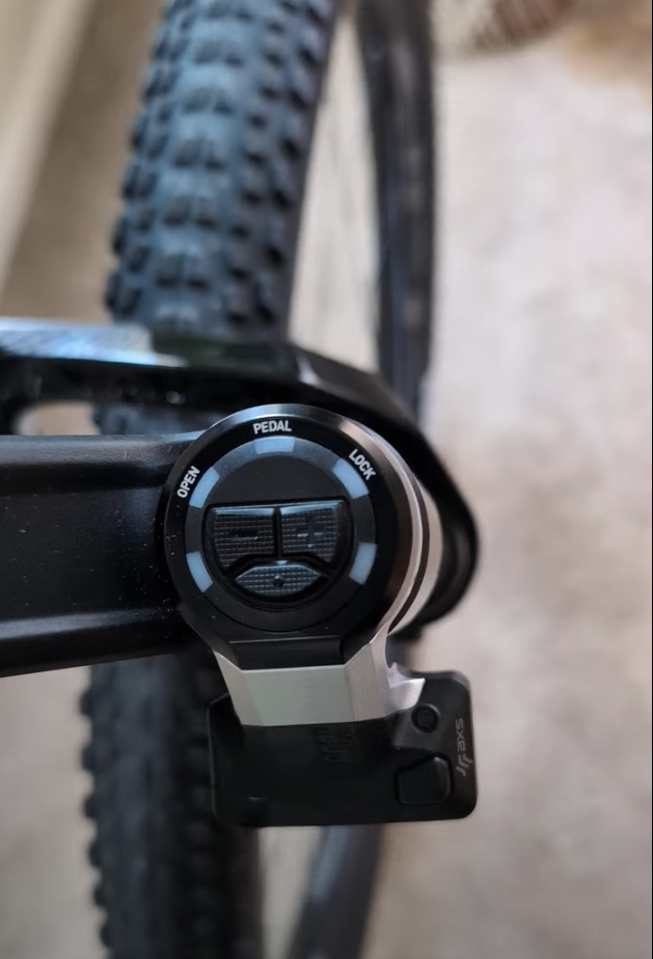
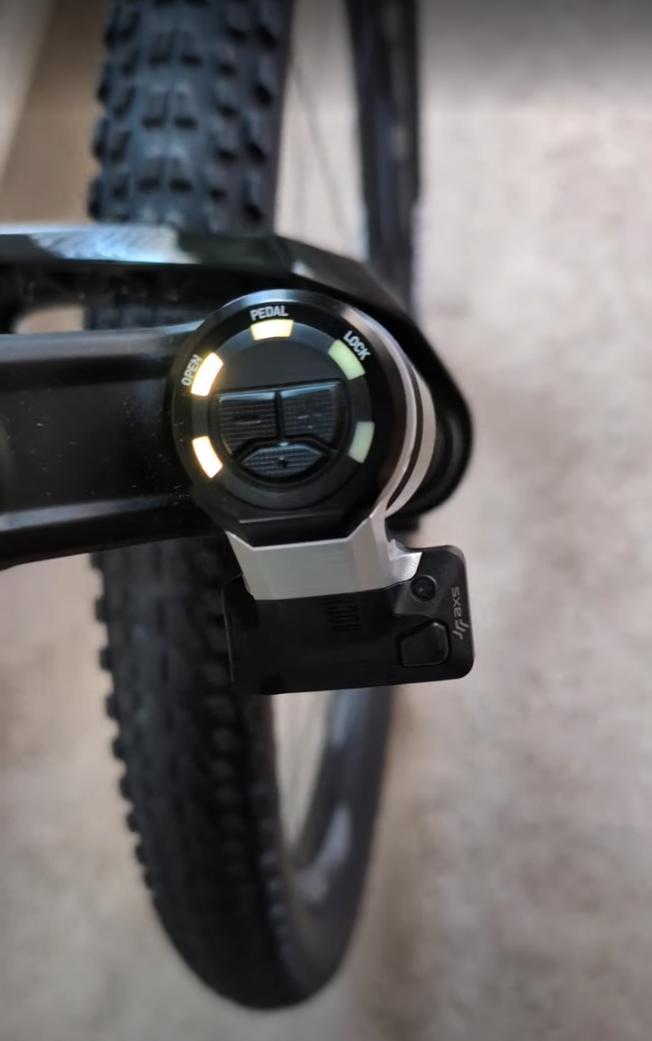
The Elja also comes equipped with a wireless dropper post and wireless shifting. I didn’t see much of a change with these when compared to wired systems, but they likely help contribute to the lighter weight of the bike.
Lauf Single Pivot Design
Lauf designed the Elja with a single pivot with no extra links or pivots to drive the shock. This helps decrease weight and maintenance for the bike. I noticed no negative changes from this design and felt that is still allowed for good overall suspension and efficient pedaling.
Conclusion
The Lauf Elja has been a pleasant surprise for me and I am incredibly grateful to the Lauf team for this opportunity. I was ready for a new bike that would advance my mountain biking skills, and the Elja has fit the bill splendidly. Day one on the bike was a noticeable improvement for me in my confidence in navigating more technical terrain. I was having even more fun than I usually do when out on the trails, which is what it is all about for me. I was also grateful for the challenge to try out different tire widths and to test out for myself what Lauf has claimed – that wider tires with lower pressures can allow for a more comfortable and faster ride. Being able to try out 3″ tires is a unique opportunity that I wouldn’t have considered before, and I am looking forward to more time on these tires in the days ahead.
 From Trails 2 Tales
Leave a comment